Bubble Tea Packaging: A Restaurant Takeaway Test Plan

Bubble tea packaging is a complete handoff system: the cup, closure, carrier, bag, accessories and order identification must work together. A lid that fits an empty sample cup does not tell you how the finished order will behave when carried with dinner. Start with a written test plan rather than a bulk purchase based only on appearance.
For North American restaurants adding drinks to food orders, the useful question is not which package looks most premium. It is which configuration staff can assemble correctly and guests can carry and open as intended. This guide proposes a local trial process, not a guarantee of leak resistance or a substitute for supplier instructions.
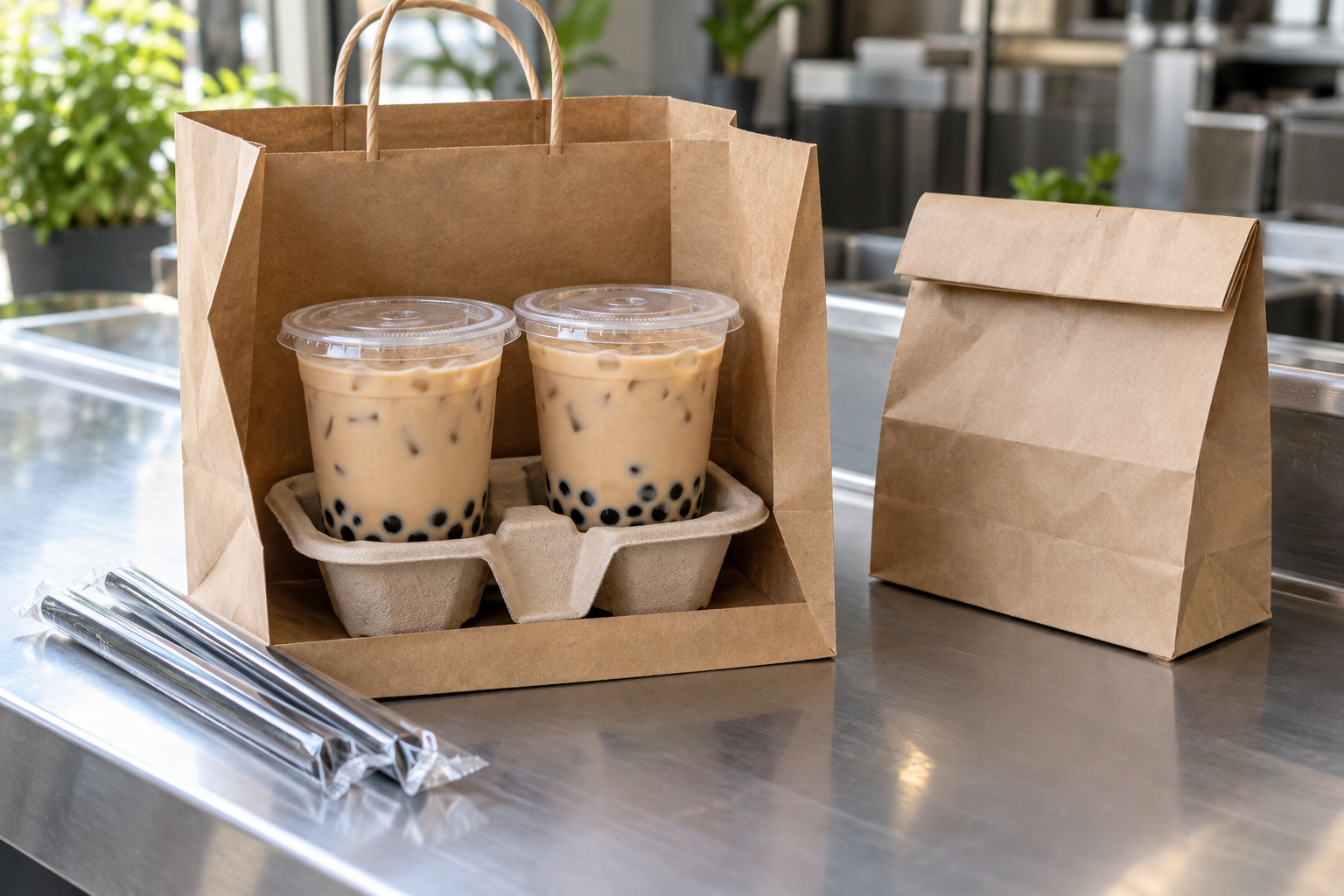
Define the Order Before Choosing Bubble Tea Packaging
List the drinks and order types you expect to pack. A single cold milk tea, several different cup sizes and a mixed food-and-drink order create different handling questions. Record the serving size, permitted toppings, closure and whether accessories travel inside the bag or separately. Use your actual menu rather than every possible future drink.
Your bubble tea packaging brief should identify who carries the order and what happens between the counter and the customer. Include pickup waiting, a walk to a vehicle and the transport conditions relevant to your business. Do not describe one successful trial as proof that every delivery route is covered.
Keep recipe and package decisions separate
Start from a defined drink using the current SiPod beverage options. A packaging trial is not permission to change approved machine ingredients or recipes. Keep the recipe stable while comparing packages so a change in fill, ice or topping quantity does not obscure the cause of a result.
Check Bubble Tea Packaging as a Matched Set
Ask the supplier for exact product identifiers for the cup and closure, intended temperature use and handling instructions. Similar-looking rims are not sufficient evidence of compatibility. Where film sealing is used, confirm the cup, film and sealer combination with the relevant suppliers rather than assuming any film works.
Keep a component record for each bubble tea packaging candidate. Photograph the sample and retain the product codes, supplier, revision and date. If a lid or cup is substituted later, treat it as a changed configuration requiring review, even when the carton description seems familiar.
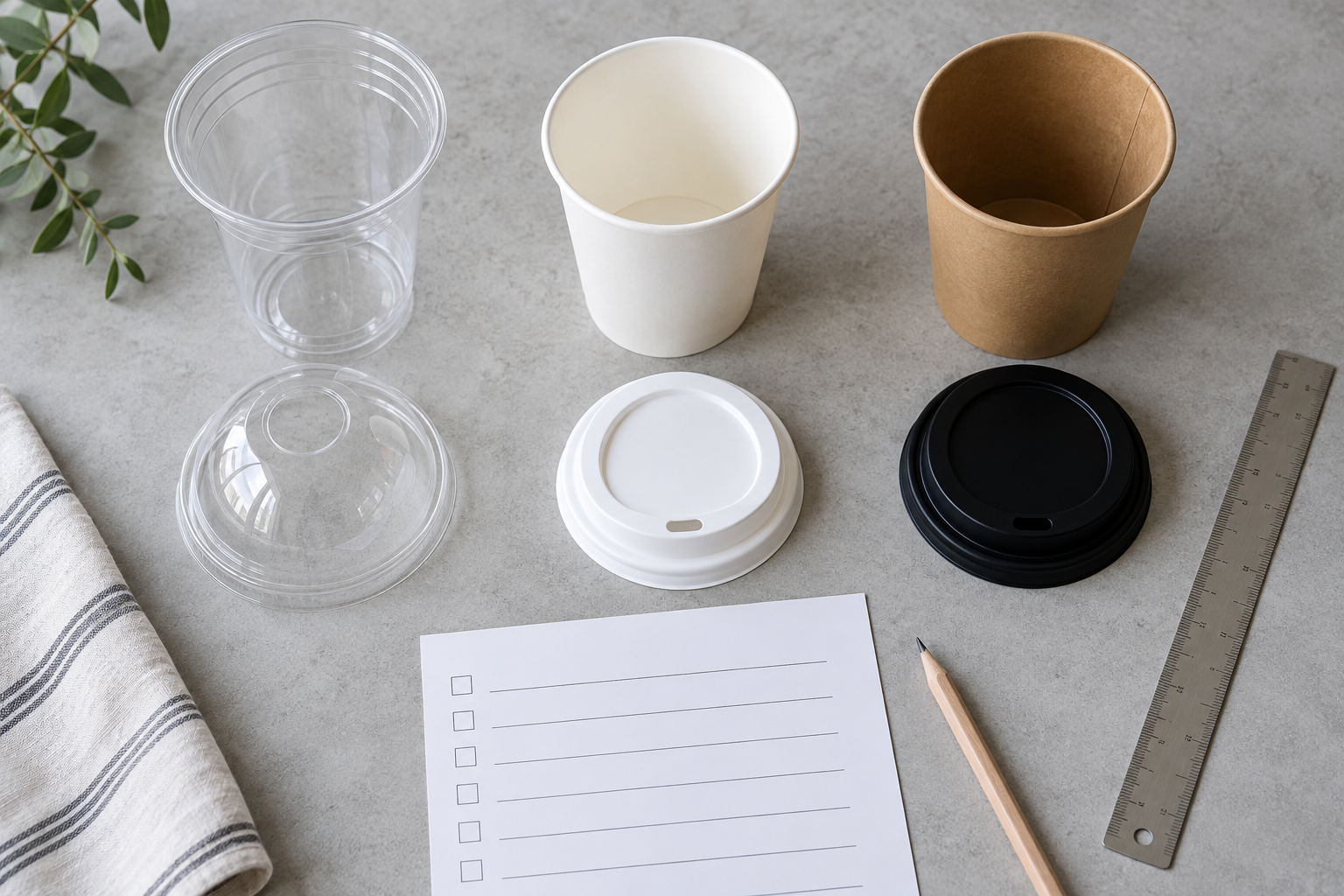
Check the opening experience too
Review how a customer opens the closure and uses the intended straw or accessory. Test only according to supplier instructions and avoid forcing incompatible parts together. The task includes a usable handoff, not merely keeping a drink closed while it sits on a counter.
Build a Repeatable Bubble Tea Packaging Trial
Write the procedure before testing. Specify the recipe, cup fill, closure method, carrier, bag, handling sequence and observations. Use the same conditions when comparing candidates. Record actual elapsed time and route details, but do not invent a universal duration that supposedly makes a package delivery-ready.
For each bubble tea packaging trial, inspect the cup exterior, closure, carrier and bag before and after the planned handling. Record visible movement, wet areas, deformation and difficulty carrying the order. Define your acceptance criteria beforehand, and document failures as carefully as passes.
Distinguish condensation from leakage
A wet outer surface deserves investigation, not an automatic conclusion. Note where moisture first appears and inspect the closure and package separately. If the cause is unclear, repeat a controlled test and ask the supplier for guidance. Visual handling checks do not establish food safety or validate holding conditions.
Test Bubble Tea Packaging With the Whole Meal
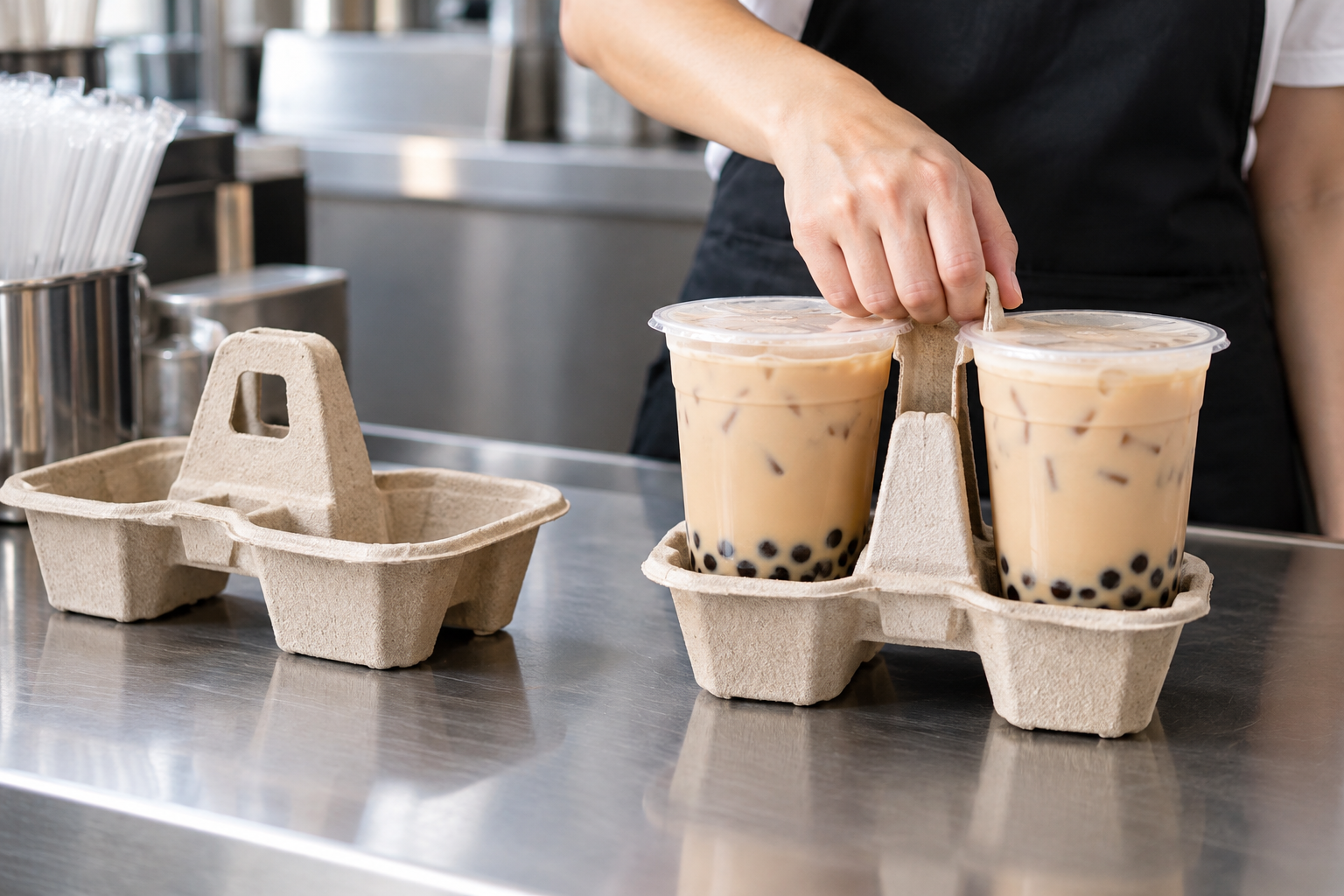
A carrier that works alone may behave differently inside a larger order. Rehearse the combinations your team actually sells: a single cup with food, several cups, or different drink sizes. Keep drinks upright and follow the packaging supplier's limitations. Do not use a food container as an improvised support without evaluating the configuration.
Assess bubble tea packaging at the point where it meets food packaging. Check whether the arrangement makes drink removal awkward, hides order labels or encourages staff to stack items in an unintended way. Resolve the layout before giving the team a final packing sequence.
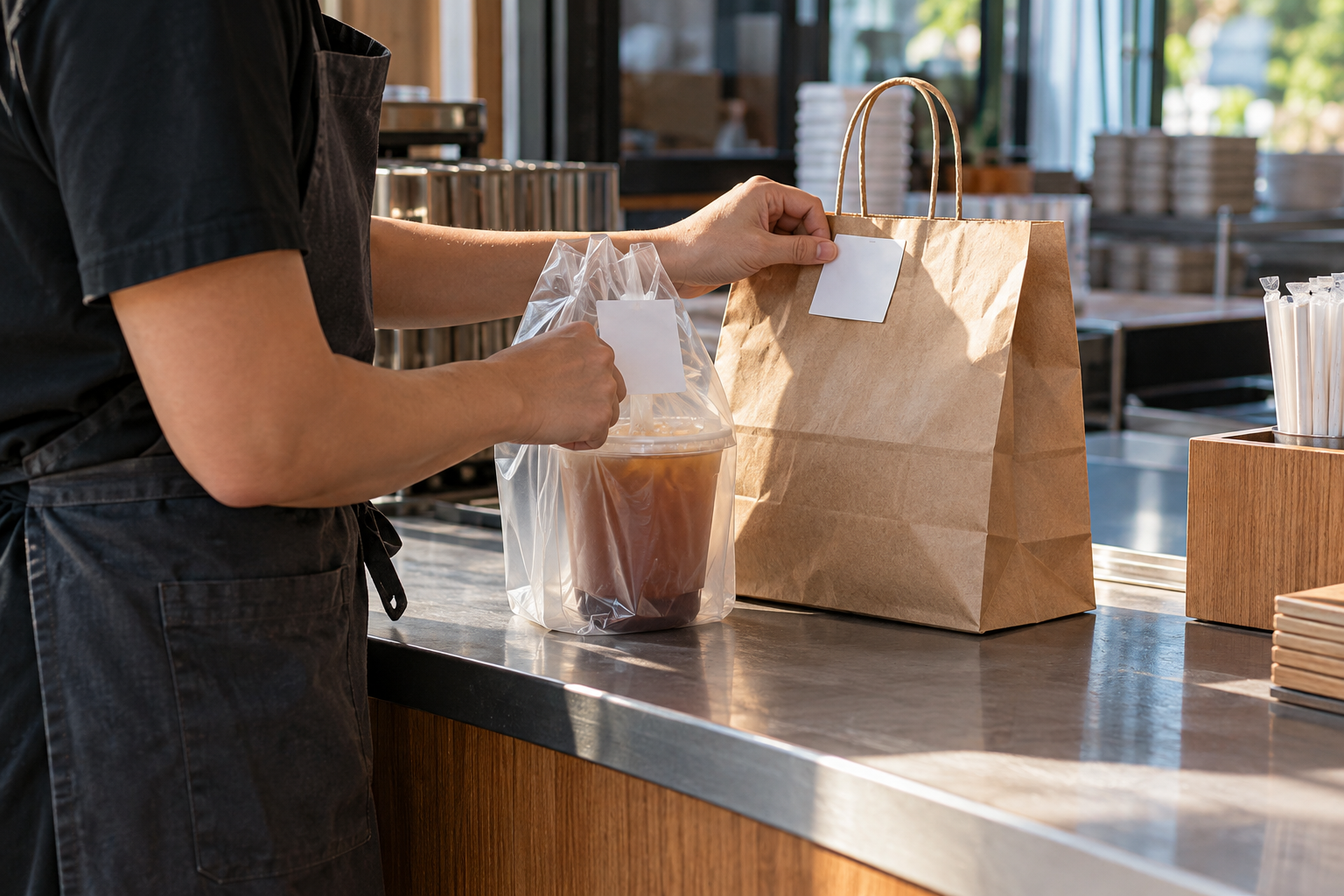
Give Bubble Tea Packaging a Clear Identification System
Use the same order identifier across the drink and food portions. Where two drinks look alike, include the information needed to distinguish the approved variants. Keep labels readable after ordinary handling and away from areas where they interfere with the closure or the customer's intended opening point.
The bubble tea packaging check at pickup should be brief but specific: correct order, correct drink count, correct variants, closures checked, accessories included as required, and bag arrangement confirmed. A clear process is more useful than asking staff to “double-check everything” without defining what that means.
Avoid unsupported package claims
Do not call an item leakproof, recyclable or compostable solely because of its appearance. Obtain relevant supplier information and check applicable local requirements before using those claims. Neither a supplier logo nor your own handling trial establishes every marketing claim you might want to print.
Compare Bubble Tea Packaging by Complete Order Cost
Compare the actual configuration, not just the unit price of an empty cup. Include the closure, carrier, bag, label and required accessories. Keep purchasing cost separate from observed remake or damage incidents so you can see which evidence supports a decision.
A bubble tea packaging trial may reveal extra assembly steps or a need for another storage location. Record these observations without turning them into an invented labor-saving percentage. Discuss current supply options with your supplier and confirm specific packaging availability rather than assuming it is included in a bundle.
Make Bubble Tea Packaging Easy to Replenish
Once a configuration is approved, give staff a component list and identify the allowed replacements. Keep incompatible lids and cups clearly separated. Store materials according to supplier instructions and the restaurant's approved procedures; do not let open cartons migrate into the pickup area simply because shelf space is tight.
Review bubble tea packaging whenever a component changes. A new vendor, rim design, carrier or bag size can change the assembled order. Keep the previous test record so the next review begins with evidence instead of memory. The restaurant supplies checklist can help organize the broader purchasing conversation.
Close the Bubble Tea Packaging Review With a Decision
Give each candidate a keep, revise or reject decision, the reason, an owner and the next action. Keep failed samples out of the approved supply area. Before launch, have another staff member follow the documented packing sequence without verbal coaching; record any ambiguous step and revise it.
After launch, review bubble tea packaging using actual pickup questions, damage reports and remake records. Record the number of relevant orders when interpreting incidents, and do not treat a handful of deliveries as proof of a long-term result. Change one element deliberately and repeat the checks when needed.
Bring your menu, sample configuration and trial notes to SiPod's supply team. A concrete operating brief makes it easier to confirm what is available and what still needs testing before a larger order.
Should pickup and delivery use the same package?
Evaluate bubble tea packaging separately for the handling conditions of each channel. A customer carrying one drink from the counter and a courier transporting a mixed order may need different configurations. Keep separate test records where the conditions differ, rather than extending one result to every order type.
What should happen after a customer reports a problem?
Record the order configuration, component identifiers and the customer's description of what happened. Review the relevant bubble tea packaging test and check whether the supplied components match the approved set. Investigate the cause before changing several components at once; retain the incident record alongside the revised decision.


Comments