How to Add Bubble Tea to Your Restaurant Menu Without Hiring a Barista

Updated: Sep 2
Bubble tea is no longer only a specialty-shop product. Customers now expect tea lattes, fruit teas, lemonades, refreshers, and boba-style drinks in many casual restaurants, especially Asian restaurants, sushi restaurants, hot pot restaurants, Korean BBQ restaurants, cafes, food courts, and takeout shops.
For restaurant owners, the opportunity is clear: drinks can lift the average ticket, give customers one more reason to order, and create a product that photographs well for social media. The challenge is also clear: most restaurants do not want to become a full bubble tea shop just to add bubble tea to your restaurant menu.
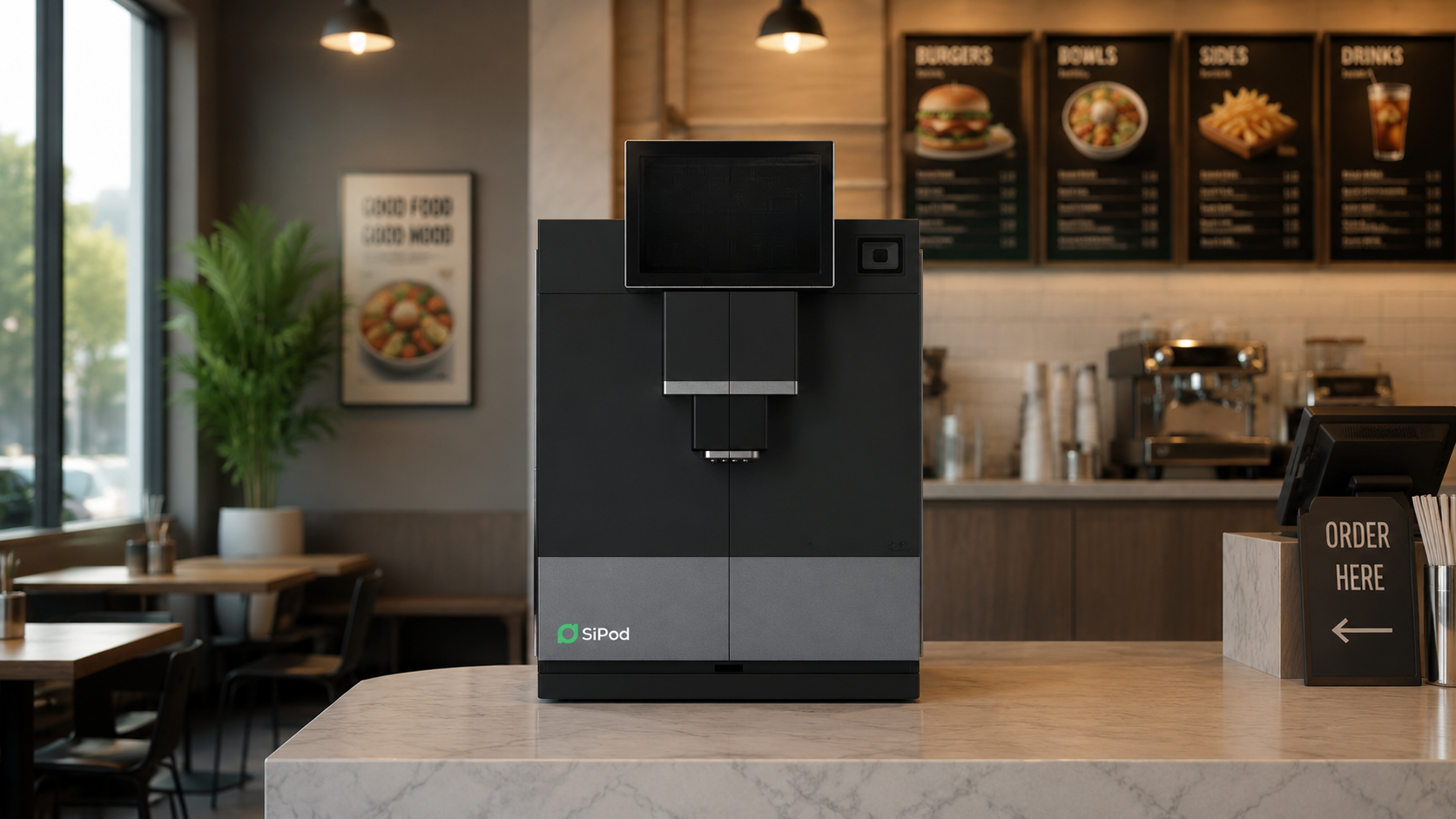
To add bubble tea to your restaurant menu in a realistic way, you need a restaurant-friendly system: a focused menu, standardized recipes, automated production, reliable supplies, and simple in-store promotion. That is exactly where a compact beverage platform like SiPod Machines can fit.
Why Add Bubble Tea to Your Restaurant Menu Now?
The reason to add bubble tea to your restaurant menu is not just trend chasing. For many operators, beverages are one of the simplest ways to increase ticket size without changing the kitchen menu.
When a customer already wants food, a drink add-on is easy to sell. A tea latte, fruit tea, lemonade, or refresher gives the order more value and gives the restaurant one more profitable item to promote at the counter, on the menu screen, and on delivery platforms.
Restaurants should add bubble tea to your restaurant menu when three conditions are true:
Customers already ask for tea drinks, lemonades, or milk tea.
Staff can make drinks without slowing down food service.
The menu is simple enough to train, stock, and promote.
If those conditions are not true yet, the first job is not to launch a huge drink menu. The first job is to build a simple operating model.
The Wrong Way to Add Bubble Tea to Your Restaurant Menu
A traditional bubble tea setup can require trained staff, multiple machines, a dedicated prep area, recipe training, ingredient sourcing, menu testing, and daily quality control. That model works for a dedicated bubble tea store. It often creates too much complexity for a restaurant where drinks are an add-on.
Common problems include:
Staff need recipe training before they can make drinks confidently.
Taste changes from employee to employee or shift to shift.
Manual measuring slows service during rush hours.
Ingredient ordering becomes another supply chain to manage.
Too many drink options create waste.
New menu items do not sell unless customers see them in-store.
That is why restaurant owners should not only ask, "Which bubble tea machine should I buy?" A better question is:
What system will help my restaurant add bubble tea to your restaurant menu with the least added labor?
Add Bubble Tea to Your Restaurant Menu With Automation
An automatic beverage machine helps turn drink-making into a repeatable process. Instead of relying on every employee to memorize recipes, measure ingredients, and adjust taste by hand, the machine follows preset drink recipes.
Automation matters because the best beverage rollout is the one your team can actually run during lunch, dinner, takeout, and delivery rushes.
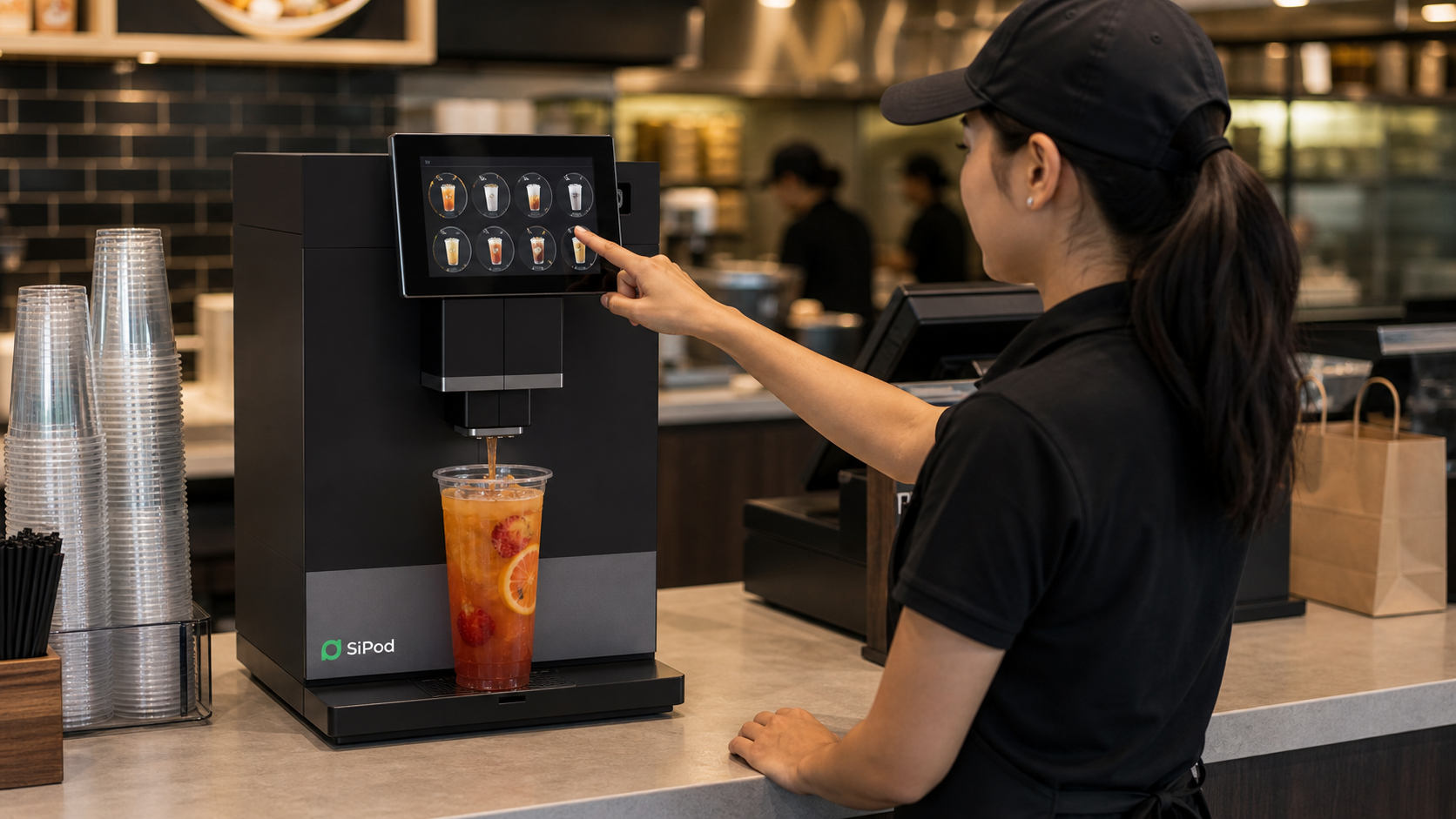
For restaurants, beverage automation can help with:
Faster drink preparation.
More consistent taste.
Less recipe training.
Lower dependence on a specialized barista.
Easier rollout across multiple employees or locations.
Better control over ingredient usage.
SiPod is built around this restaurant use case. The system combines machine, recipes, ingredient supply, app management, and marketing support, so a restaurant can launch a bubble tea menu without building a beverage department from scratch.
Start Small When You Add Bubble Tea to Your Restaurant Menu
The goal is not to copy a bubble tea shop menu with 80 combinations. For most restaurants, the better goal is to add bubble tea to your restaurant menu with a focused drink lineup that is easy to explain, easy to produce, and easy to sell.
A strong starter menu usually has:
2 to 3 milk tea or tea latte drinks.
2 to 3 fruit tea or lemonade drinks.
1 seasonal or signature drink.
1 to 2 topping options, if they fit your operation.
Clear pricing and simple staff instructions.
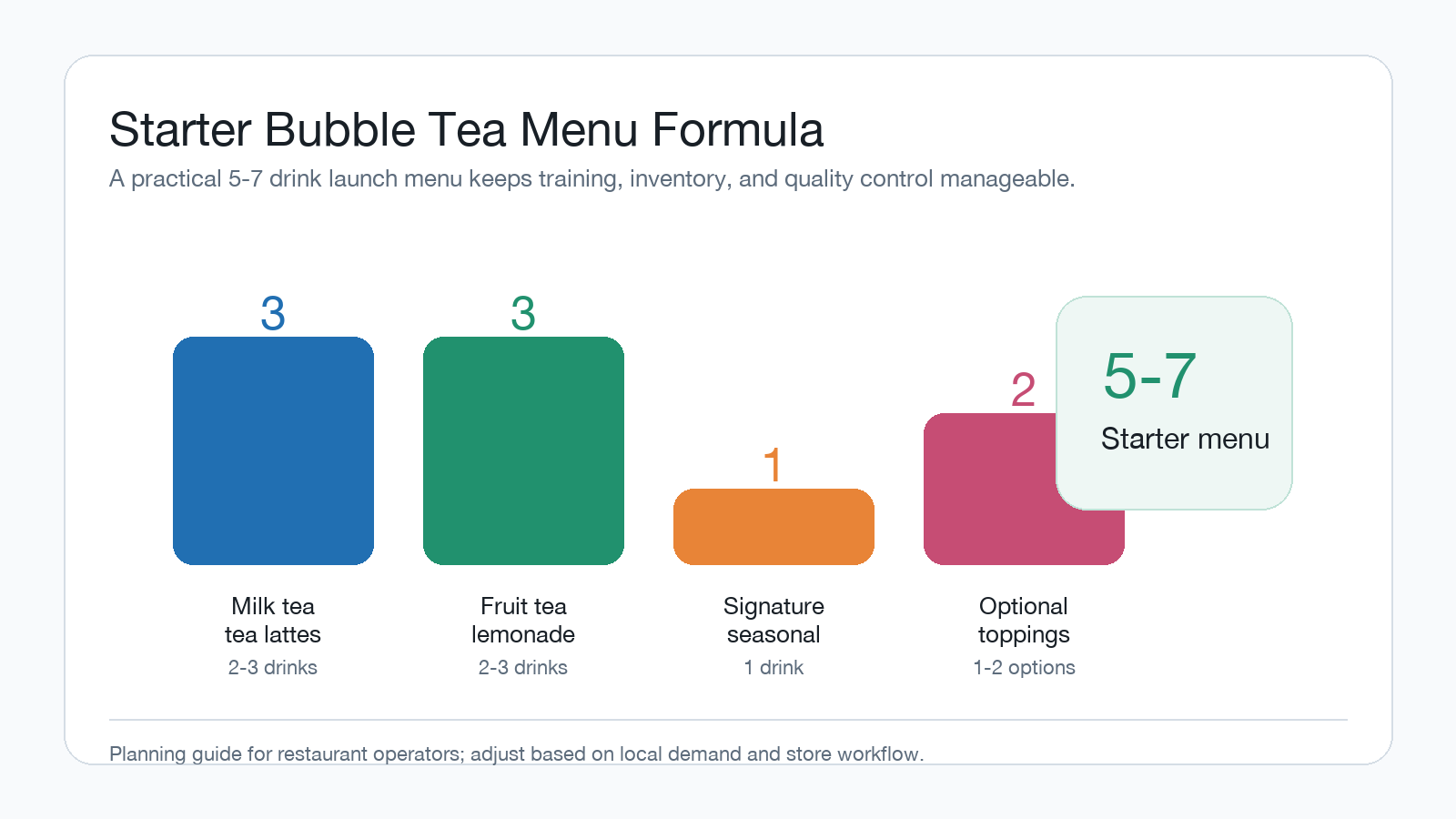
This starter structure gives customers enough choice without creating unnecessary complexity. It also helps your team learn what sells before you expand the menu.
For the first 30 days, the smartest way to add bubble tea to your restaurant menu is to keep the menu narrow and measure what happens. Watch which drinks sell, which ingredients move fastest, and which items staff can explain easily.
Choose Drinks That Fit Your Restaurant
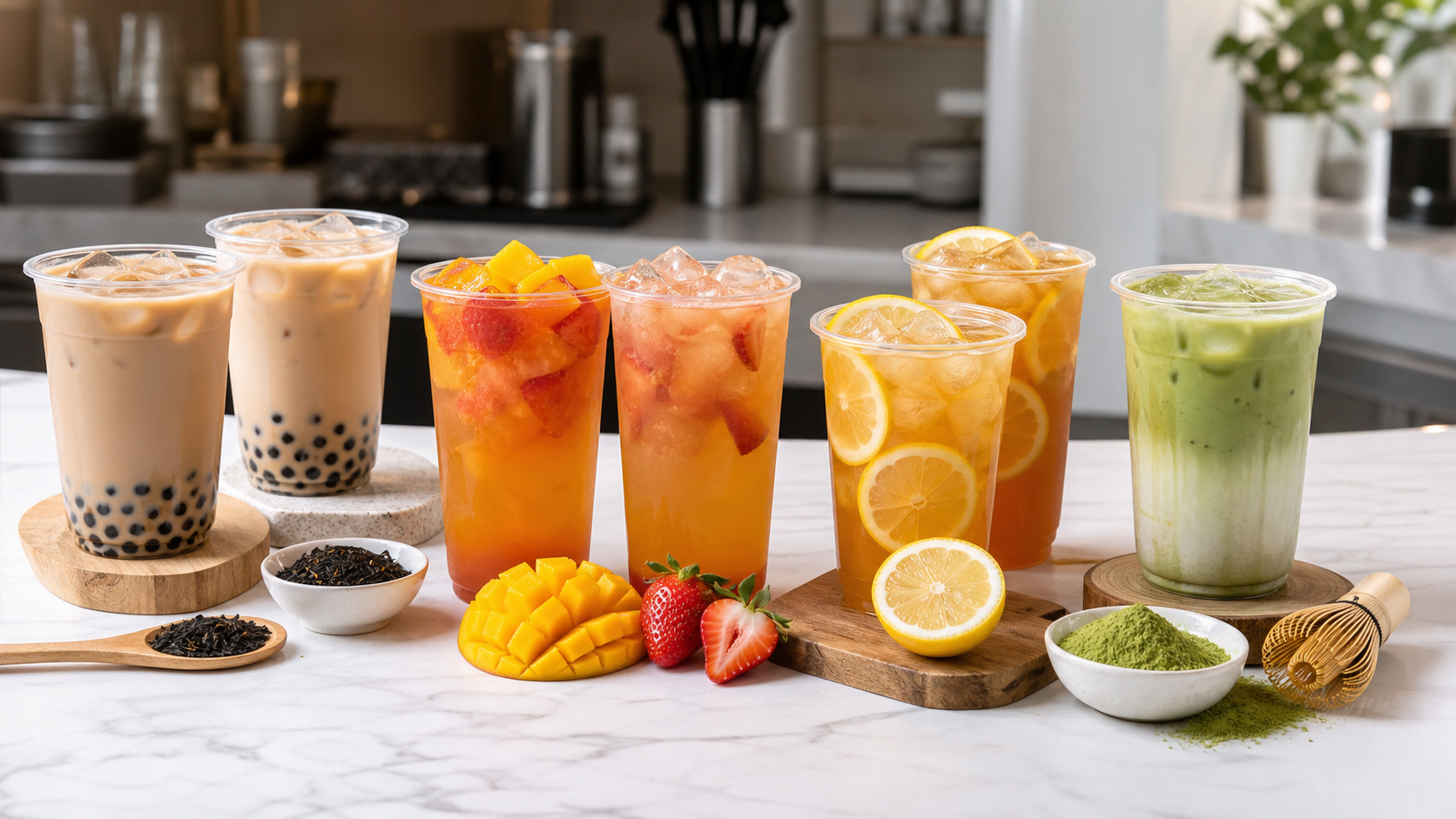
The best menu depends on the restaurant type. A hot pot restaurant may sell refreshing fruit teas and lemonades especially well. A sushi restaurant may lean toward matcha, jasmine tea, and lighter fruit drinks. A takeout restaurant may want drinks that travel well and look good in sealed cups.
Asian Casual Restaurant
If you run an Asian casual restaurant, add bubble tea to your restaurant menu with drinks that customers already recognize:
Brown sugar milk tea.
Jasmine milk tea.
Mango fruit tea.
Strawberry lemonade.
Seasonal refresher.
Hot Pot or Korean BBQ
Hot pot and Korean BBQ menus often pair well with bright, refreshing drinks:
Lemon black tea.
Grapefruit green tea.
Passion fruit tea.
Sparkling lemonade.
Yogurt fruit tea.
Sushi or Japanese Restaurant
Sushi and Japanese restaurants can add bubble tea to your restaurant menu with lighter tea-forward drinks:
Matcha latte.
Jasmine green tea.
Peach oolong tea.
Yuzu lemonade.
Strawberry milk tea.
Takeout or Food Court Restaurant
For takeout and food court locations, choose drinks that are simple to sell and easy to carry:
Classic milk tea.
Mango lemonade.
Peach fruit tea.
Brown sugar fresh milk.
One limited-time special.
The key is to add bubble tea to your restaurant menu in a way that matches your customer base, not someone else's bubble tea shop.
Build the Full System Before You Launch
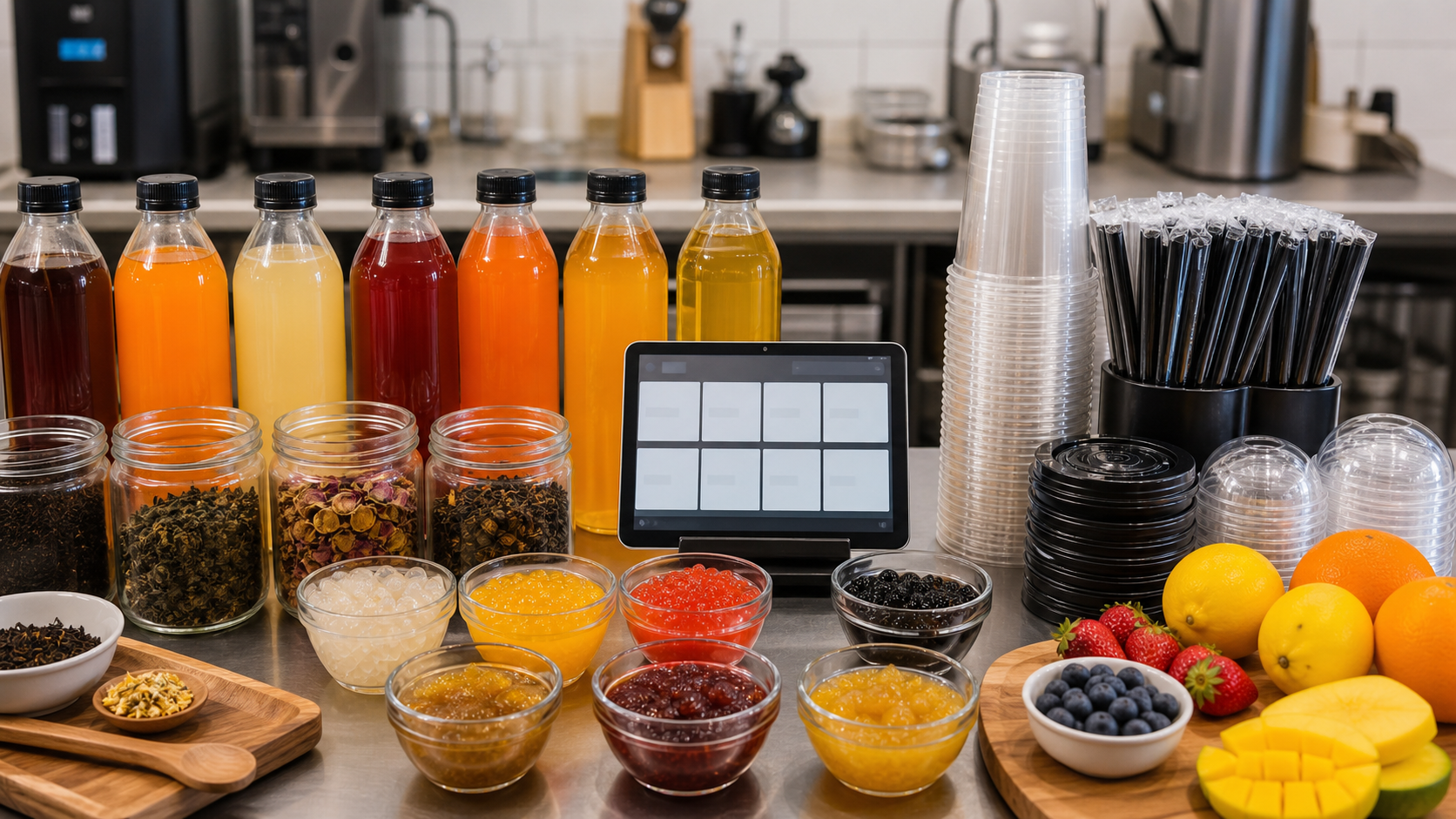
A profitable restaurant drink menu is not only about the machine. To make the launch last, four pieces need to work together.
1. Recipes
Recipes should be standardized before launch. The customer should get the same taste on Monday lunch and Saturday dinner.
2. Production
The drink-making process should be fast enough for restaurant service. If every drink slows the line, staff will avoid selling it.
3. Supplies
Ingredients, cups, lids, toppings, and disposables need to be easy to restock. A drink menu fails quickly if one key ingredient is always missing.
4. Promotion
Customers need to know the drinks exist. Posters, counter cards, menu inserts, TV menu visuals, and staff prompts can make a major difference.
SiPod's current site describes this as a recipe-to-revenue system: recipe, produce, supply, and promote. That framing is useful because it treats beverages as a business program, not just a piece of equipment.
What to Measure After You Add Bubble Tea to Your Restaurant Menu
Once the menu goes live, track a few simple numbers:
Cups sold per day.
Average drink price.
Ingredient cost per drink.
Attach rate: how many food orders include a drink.
Top-selling drinks.
Slow-moving ingredients.
Staff feedback.
Customer questions.
You do not need complicated reporting at the beginning. You need enough visibility to know whether the menu is worth expanding.
Launch Checklist to Add Bubble Tea to Your Restaurant Menu
Before launch:
Choose 5 to 7 drinks.
Confirm machine placement and power access.
Prepare ingredient storage.
Set drink prices.
Add drinks to your POS.
Train staff on ordering, production, and handoff.
Prepare cups, lids, straws, and toppings.
Add menu photos or visual cards.
Create a launch offer.
During launch:
Put drinks on the front counter or menu screen.
Ask staff to mention drinks during checkout.
Track daily cups sold.
Watch prep speed during rush hours.
Record customer questions.
After launch:
Remove weak sellers.
Promote best sellers.
Add seasonal items.
Adjust ingredient orders.
Use sales data to improve pricing and menu placement.
FAQ: Add Bubble Tea to Your Restaurant Menu
Do restaurants need a trained barista to add bubble tea to your restaurant menu?
Not necessarily. A restaurant-friendly beverage program can use standardized recipes and an automatic beverage machine to reduce the need for specialized barista training.
How many drinks should a restaurant launch first?
Most restaurants should start with 5 to 7 drinks. This gives customers choice without making training, inventory, and quality control too complicated.
What types of restaurants are a good fit for bubble tea or fruit tea?
Asian restaurants, sushi restaurants, hot pot restaurants, Korean BBQ restaurants, cafes, food courts, and takeout shops can all be good fits if the menu is simple and the drinks match the customer base.
What is the biggest mistake when adding bubble tea to a restaurant?
The biggest mistake is treating drinks as only a product instead of an operation. A successful launch needs equipment, recipes, ingredients, staff process, and in-store promotion.
How can SiPod help restaurants add bubble tea to your restaurant menu?
SiPod helps restaurants launch a beverage program with an all-in-one countertop beverage maker, standardized recipes, ingredient supply, app support, and marketing materials. Restaurants can start serving drinks without building a full bubble tea shop operation.
Ready to Add Bubble Tea to Your Restaurant Menu?
SiPod is designed for restaurants that want to serve better beverages faster, with no prior drink-making experience and no extra barista hire required.
Explore SiPod Machines, review SiPod pricing, and see restaurant drink menu ideas your team can launch with a compact countertop beverage system.

Comments