Automatic Milk Tea Machine ROI: How Many Drinks Does a Restaurant Need to Sell?

For many restaurant owners, the question is not whether drinks can sell. The real question is whether the numbers make sense.
Bubble tea, fruit tea, lemonades, tea lattes and refreshers can raise average order value, but a restaurant should not add a beverage program only because the drinks look popular. The smarter starting point is automatic milk tea machine ROI: how many drinks need to sell each day for the machine, ingredients, staff workflow and marketing effort to pay off?
SiPod describes this category as a smart beverage machine because it can support more than milk tea. From a search perspective, however, many restaurant owners still look for an automatic milk tea machine, an automatic bubble tea machine or a bubble tea machine first.
A good automatic milk tea machine ROI model does not need to be complicated. It should help an owner estimate daily drink sales, average drink price, ingredient cost, labor impact and monthly equipment cost before launching the menu.
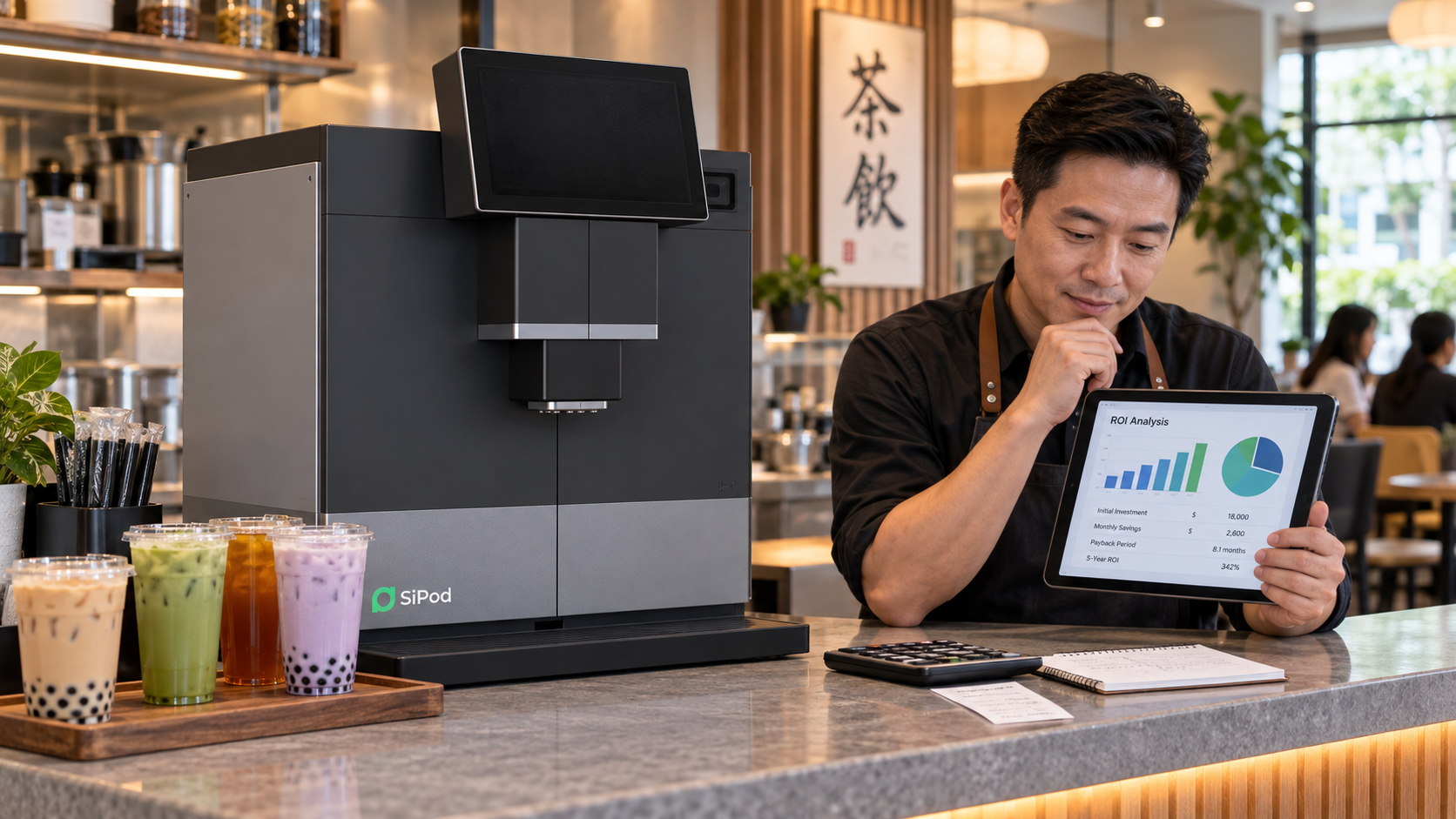
Why Automatic Milk Tea Machine ROI Matters
Restaurants already operate with tight labor, kitchen and rent costs. A new drink menu should not become another complicated station that slows the team down. Automatic milk tea machine ROI matters because it connects the drink idea to daily operations.
If a restaurant sells only a few drinks per week, the machine may not pay back quickly. If the restaurant has strong foot traffic, takeout volume or customer demand for tea drinks, the same setup can become a useful profit center.
The key is to calculate automatic milk tea machine ROI before building a large menu. A simple model gives the owner a target:
How many drinks should the restaurant sell per day?
What price should the menu support?
What ingredient cost is acceptable?
How much labor can automation reduce?
What promotion is needed to reach the sales target?
This makes the launch easier to judge after 30 days.
The Simple ROI Formula
The simplest way to estimate automatic milk tea machine ROI is:
Monthly gross profit from drinks minus monthly machine cost equals estimated monthly contribution.
In practical terms:
Estimate average drink price.
Subtract ingredient and packaging cost per drink.
Multiply by cups sold per day.
Multiply by operating days per month.
Subtract monthly machine cost.
For example, if a restaurant sells a drink for $5.99 and the ingredient plus cup cost is around $1.50, the gross profit before labor and overhead is about $4.49 per drink. If the restaurant sells 10 drinks per day for 30 days, that is about $1,347 in monthly gross profit before machine cost.
That is why even a modest drink volume can matter. Restaurant beverage machine ROI often depends less on launching a huge drink menu and more on selling a focused menu consistently.
Example Break-Even Scenarios
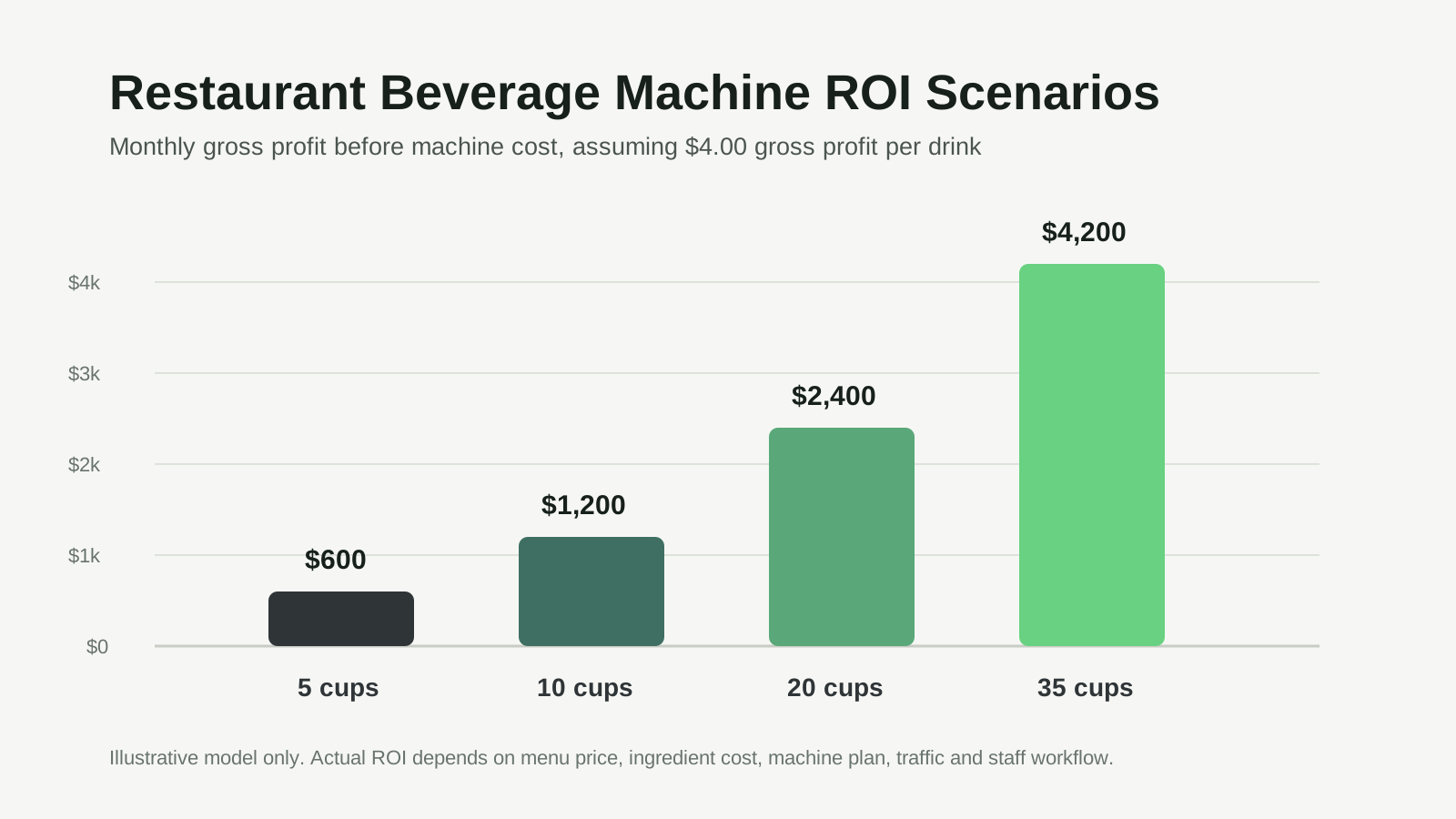
The numbers below are simplified examples. Actual automatic milk tea machine ROI depends on local pricing, ingredients, rent, staff cost, menu mix and machine plan.
| Cups per day | Average drink gross profit | Monthly gross profit before machine cost | |---:|---:|---:| | 5 cups | $4.00 | $600 | | 10 cups | $4.00 | $1,200 | | 20 cups | $4.00 | $2,400 | | 35 cups | $4.00 | $4,200 |
For a restaurant that already has steady dine-in, takeout or delivery orders, 10 to 20 cups per day can be a realistic early target if the drinks are visible on the menu, suggested by staff and promoted at the counter.
That does not mean every restaurant should expect the same automatic milk tea machine ROI. A hot pot restaurant, sushi restaurant, Chinese takeout shop, Korean BBQ restaurant, cafe or food court location may have different traffic patterns and drink demand.
Start With Drinks That Are Easy to Sell
Restaurant beverage machine ROI improves when the menu is easy for customers to understand and easy for staff to recommend.
Instead of launching with dozens of flavors, many restaurants should begin with 5 to 7 drinks:
2 to 3 milk tea or tea latte drinks.
2 to 3 fruit tea, lemonade or refresher drinks.
1 seasonal or signature drink.
Simple toppings only if the workflow supports them.
This focused menu helps the team control ingredients, explain drinks faster and identify best sellers. Once the restaurant knows which drinks move, it can expand the menu with more confidence.
For operators who are still deciding what to sell, theSiPod beverage menupage is a useful starting point for tea lattes, fruit teas, lemonades and refreshers.
Ingredient Cost Can Decide the Payback
Restaurant beverage machine ROI is not only about the machine. Ingredients, cups, lids, straws, toppings and waste all affect the real margin.
If a drink sells for $5.99 but ingredient cost is too high, the payback slows down. If recipes are standardized and the restaurant controls portioning, the same drink can produce stronger contribution.
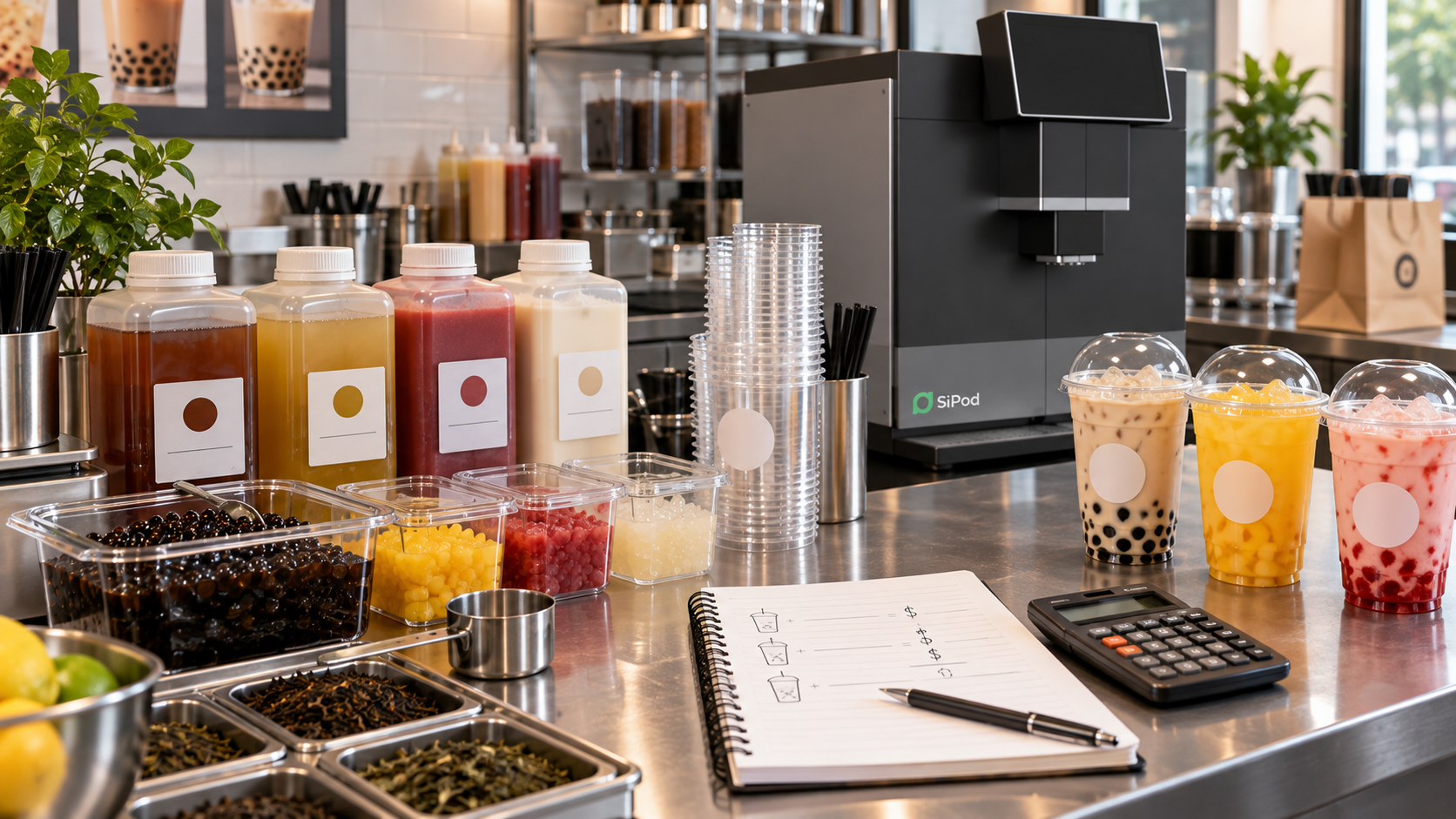
Operators should track:
Cost per recipe.
Cup and lid cost.
Topping cost.
Waste from expired ingredients.
Best-selling drinks by week.
Ingredient reordering frequency.
This is one reason a one-stop supply model can help. When machine, recipes andingredient supplyare planned together, the restaurant can manage the beverage program as one system instead of many separate purchasing decisions.
Labor Savings Are Part of ROI
A traditional drink station often needs training, measuring, recipe memory and quality checks. That can make drink sales feel risky for restaurants that do not have dedicated baristas.
An automated beverage machine can improve automatic milk tea machine ROI by reducing the labor burden behind each drink. It does not remove all work, but it can make production more repeatable for regular staff.
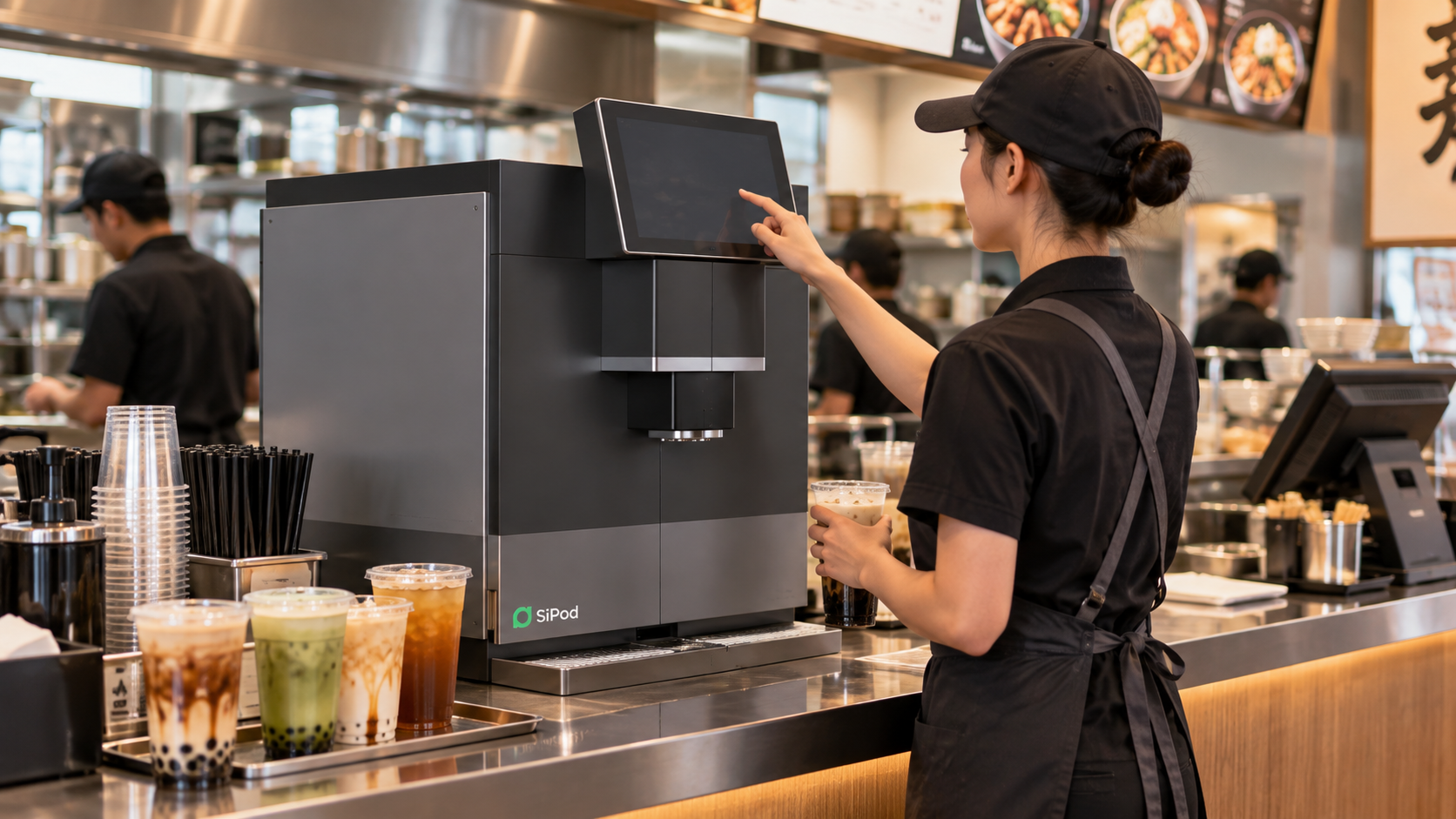
Labor impact matters in three ways:
Training is simpler when recipes are preset.
Drink taste is more consistent across shifts.
Staff are more likely to suggest drinks if production is easy.
This is especially important during lunch, dinner, takeout and delivery rushes. A beverage menu that slows service may look profitable on paper but fail in practice.
Promotion Helps the Machine Pay Back Faster
Many restaurants undercount promotion when calculating automatic milk tea machine ROI. Customers cannot order drinks they do not notice.
A new drink menu needs visibility:
Counter cards.
Window posters.
TV menu slides.
Delivery app photos.
Staff prompts.
Bundles with best-selling dishes.
Limited-time launch offers.
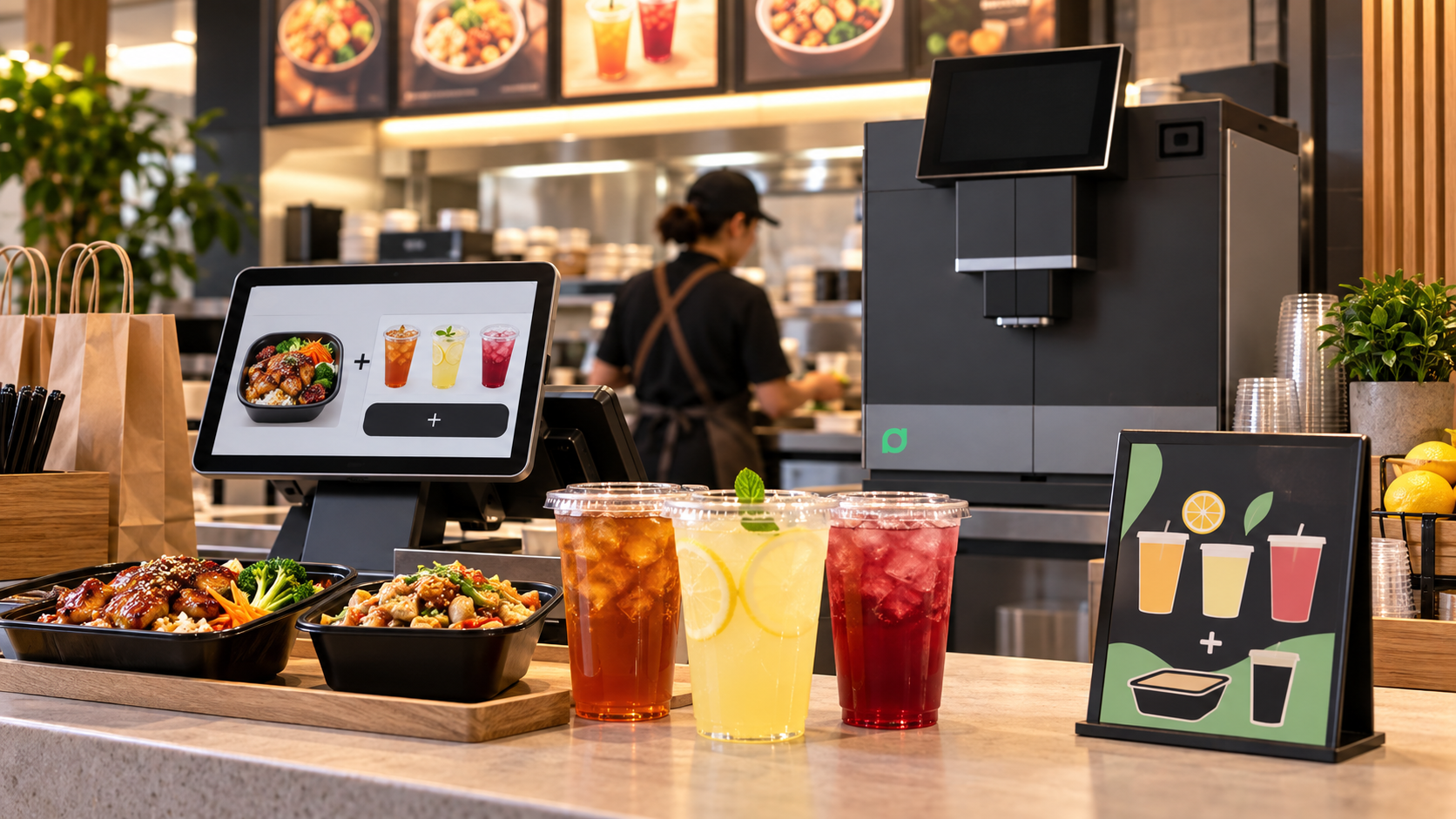
If the restaurant already has popular lunch combos, dinner sets or takeout meals, drinks should be positioned as an easy add-on. Even a small attach rate can change the monthly result.
For example, if a restaurant serves 150 orders per day and 8% of customers add a drink, that is 12 drinks per day. With the right pricing and cost control, that can be enough to make the beverage program worth tracking closely.
What to Measure in the First 30 Days
The first month should not be judged only by total sales. A better automatic milk tea machine ROI review looks at both revenue and workflow.
Track these numbers:
Cups sold per day.
Average drink price.
Gross profit per drink.
Top 3 drinks.
Slow-moving ingredients.
Staff questions.
Customer questions.
Drink attach rate.
Delivery app drink orders.
Repeat purchase signals.
If the restaurant sells fewer drinks than expected, the solution may not be to add more flavors. It may need better menu placement, stronger photos, staff prompts or simpler drink names.
If staff avoid selling the drinks, the workflow may need to be easier.
When Does a Beverage Machine Make Sense?
A beverage machine is usually worth evaluating when a restaurant has at least one of these conditions:
Customers already ask for tea, lemonade, milk tea or fruit drinks.
The restaurant has steady takeout or dine-in volume.
The menu has meals that pair naturally with drinks.
The owner wants to raise average order value.
The team cannot hire or train a dedicated drink specialist.
The restaurant wants a repeatable beverage program across shifts or locations.
SiPod is built for this type of operator: a restaurant that wants a real drink menu but does not want to build a full bubble tea shop inside the restaurant.
You can compare options on the SiPod machines page and review current plans on the SiPod pricing page.
Automatic Milk Tea Machine ROI Checklist
Before launching, confirm:
The restaurant has a focused starter menu.
Each drink has a target price.
Ingredient cost is estimated.
Staff know how to recommend the drinks.
Menu photos and promotion assets are ready.
POS buttons are set up.
Supplies are easy to reorder.
The owner knows the daily cup target.
Restaurant beverage machine ROI becomes much easier to manage when the restaurant treats beverages as a small operating system: recipe, machine, supply, training, promotion and measurement.
FAQ: Automatic Milk Tea Machine ROI
How many drinks per day does a restaurant need to sell?
It depends on drink price, ingredient cost and machine plan. Many restaurants should first model 5, 10, 20 and 35 cups per day to see which target makes sense.
What is the biggest ROI mistake?
The biggest mistake is calculating machine cost but ignoring ingredient waste, staff workflow and promotion. Restaurant beverage machine ROI depends on the whole system.
Does automation replace staff?
No. Automation helps regular staff make drinks more consistently. The goal is to reduce specialized training and manual measuring, not remove service work.
Should a restaurant launch a large menu?
Usually no. A focused 5 to 7 drink menu is often better for the first month because it is easier to train, promote and measure.
Ready to Calculate Your Beverage ROI?
If your restaurant is considering a drink menu, start with the daily cup target and work backward from the numbers.
View SiPod pricing to compare plans, or explore SiPod machines to see how an automated beverage station can fit your restaurant workflow.
Read this guide in Chinese: 自动奶茶机回本:每天卖多少杯才划算?